
Have you just bought yourself some packing cubes? Or are thinking about getting some for your next trip?
Well, before you do, ensure that you’re aware of these top 8 packing cube tips for travellers!
These tips will help you to look after your packing cubes to ensure that they last, as well as choose the right packing cube for your trip.
Related:
- The Best Travel Gear for Solo & Adventure Travellers
- How to Use & Pack a Packing Cube (& 3 Easy Hacks to Save Space)
Packing Cube Tip #1 – How to Wash and Dry Your Packing Cubes / Cells
Of all of the packing cube tips for travellers online, this is one you may see referenced a lot.
”Can you wash packing cubes?”
In general, you should not wash packing cubes in a washing machine or dry them in a dryer as doing so can damage the structure.
It is also suggested that you avoid washing them with traditional laundry detergent.
Instead, most packing cube brands recommend that you:
- Wash them by hand or spot clean
- Dry them outside in a shaded spot or by hanging them on a washing line
I do believe that this depends on the material they are made of, which is why you should check the washing instructions on the tag of your packing cubes (or the product sales page) before you wash them.
For my entire trip, I avoided washing my packing cubes – except for a basic spot clean here and there. So by the time I arrived home, they were pretty manky, guys!

I decided to live on the edge and chucked them into my washing machine on a very gentle cool hand wash cycle (with no detergent). After all, #YOLO.
Surprisingly, they came out ok and looked sparkly clean. However, I would recommend reading the instructions on your packing cubes before washing.
Packing Cube Tip #2 – Compression vs. Standard Cubes
Yes, “What’s the difference between packing cubes and compression cubes?” is a common question asked by newbie travellers, and even by myself.
When considering my top packing cube tips for travellers, this was one that I just couldn’t leave off the list.
There tends to be a bit of a misconception that compression packing cubes are automatically better than standard ones, given the more premium price tag. However, I don’t necessarily believe this to be true.
I believe that it depends on various factors including:
- How long you’re planning to travel for
- The type of bag you’re taking with you
- Whether you’re packing carry-on or check-in luggage
- Your budget
Of course, the idea of extra compression is advantageous, especially if you’ll be travelling with a small bag and need to save as much space as possible. But, there are some brands that market their products as being “compression cubes” when they don’t offer much extra compression compared to a standard packing cube.
This kind of pisses me off to be honest, as I feel it is misleading advertising.
I actually did a detailed review of various standard and compression packing cells.
It took me weeks of research and writing to put together, and is now a useful guide for newbie travellers to better understand what to look for when buying the best packing cubes.
Out of 11-12 different packing cube brands, I was able to narrow down the options to 4 finalists, which I would personally buy myself based on quality, price and customer reviews.
You can check the full article out below:
Packing Cube Tip #3 – Which Type of Material Should You Get?
Most packing cubes are made from polyester, nylon or a synthetic fabric called silnylon (a combination of silicone and nylon).
Personally, I’m not convinced that there’s a huge difference in quality between nylon and polyester. I prefer to focus more so on the quality of the seams and the zips.
Given these are the sections of the packing cube that will be under the most stress when stuffing, opening or closing your packing cube, they will be the first features to break – if poor quality.
Something I do like to look for in my packing cubes is that they have at least one side made with a “mesh” cover. This can be handy when backpacking because it allows your clothes to breathe and you can easily see what’s inside your packing cube without having to completely unpack everything.
If buying a packing cube set from a store, you may like to feel the material and see which type you prefer. If you don’t have a preference, I believe its much of a muchness, so don’t get too bogged down on this.

Packing Cube Tip #4 – What Size of Packing Cube/ Cell Should You Get?
The answer to this question: It depends.
My top size-related packing cube tips for travellers are that you should choose your packing cubes on the basis of:
- How long you’re planning to travel for
- The weather/season of the country you’re planning to travel in – Summer vs. Winter
- The size of the travel backpack
- The thickness of the clothes you’re packing
- The type of travel you will be doing – backpacking vs. luxury travel.
- Your budget, etc.
Most packing cubes come in sizes similar to the below:
- Extra Large – 44.5cm x 32cm x 10cm
- Large – 35cm x 32cm x 10cm
- Medium – 35cm x 24cm x 10cm
- Small – 28cm x 17cm x 10cm
Large to extra large packing cubes are great for chunkier items such as winter clothes, tracksuit pants, hoodies/jumpers and puffer jackets. However, the larger the packing cube gets, the harder it is to fit it inside medium-sized travel backpacks.
Generally, packing cubes of sizes above 35cm are better for standard suitcases, rather than travel backpacks.
Medium packing cubes are good for clothing such as tops, t-shirts, blouses, thin jumpers, skirts and shorts, and smaller packing cubes are great for your delicates such as underwear and socks.
If you’ll be using a travel backpack, I’d suggest opting for packing cubes between the sizes of 28-35cm.
Packing Cube Tip #5 – How to Pack a Packing Cube to Save Space
This is one of the greatest mistakes newbie travellers make.
Do packing cubes save space? Yes they do!
I have travelled several times without packing cubes, and although tolerable, you do realise how much more convenient these babies make packing and unpacking, helping you save more space.
Yes, this is a common question asked by newbie travellers, including myself.
“What is the difference between Packing Cubes and Compression Cubes?”
But, to get the most out of them, it is really important to learn how to properly pack a packing cube.
Doing so can save you time, improve organisation and save space.
My greatest tip – ROLL, don’t fold.

For standard packing cubes, this is a great way to compress any additional air out of your clothes, reduce wrinkles and easily see what you’ve packed.
For compression cubes, some brands suggest that you fold your clothes as this allows even compression throughout the cell, rathe than creating bulges in the centre.
I think it’s worth having a practice before you go to see which method you prefer and that allows you to fit the most in your bag.
You can read more about how to pack a packing cube below:
Packing Cube Tip #6 – What to Do if a Packing Cubes Breaks While Travelling
Honestly, staples and sticky tape will be your best friend.
When I was travelling overseas for my big 1-year solo backpacking trip, one of my packing cubes started to completely fall apart.
And, it wasn’t even a cheap packing cube – this particular one was from Kathmandu! (supposedly high quality)
By the end of my trip, the seams were falling apart and it was ripping in multiple sections around the zips.
The way I overcame this was by borrowing a stapler and sticky tape from a hostel I was staying in. I went nuts on taping it up and stapling the seams together.
This was the outcome:

It did the trick, but I probably wouldn’t buy the same packing cubes again given the inconvenience and poor durability.
I thought I should include this in my list of packing cube tips for travellers, as it is something that you could experience during your trip.
Related:
Packing Cube Tip #7 – The Best Places to Buy Packing Cubes / Cells
There are many places to buy packing cubes.
You can physically visit a travel, adventure or outdoor leisure store such as:
Most of these stores will sell packing cubes, however I do find that they tend to be on the pricier side – not necessarily value for money.
There is a perception that MacPac, Kathmandu and Anaconda branded packing cubes are better quality, however as I mentioned above, one of my Kathmandu packing cells fell to pieces! Therefore, I can’t believe this to be true.
Another option is to buy your packing cubes online.
Buying you packing cubes online tends to provide you with many more options and you can also grab some pretty great bargains and colours.
If you’re wanting to buy a set of packing cubes or save yourself some money, I 100% recommend that you consider buying them online.
Here are some popular online brand sets that you can check out – both of these made it into my finalist picks.
1) Shacke Pak 4-Set of Packing Cubes

2) BAGAIL 6-Set of Packing Cubes
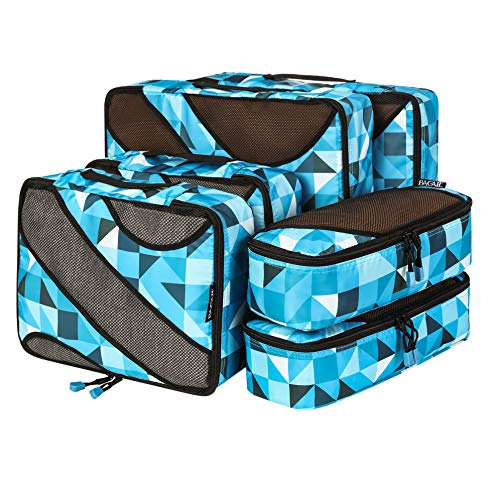
Here’s why:
- Both of these packing cube sets come with a mixture of shapes and sizes that allow you to pick and choose which packing cells you’d like to use, depending on your trip.
- They are made from quality Nylon and have 2-way zippers for easy opening and closing
- They have a price around $40-50 AUD which is very good for this many packing cells. In my eyes this is great value for money.
- For the Shacke Pak you are getting the equivalent of 4 packing cubes for $10 and for BAGAIL, 6 packing cubes for $7 each.
- They average around 84%-87% 5 star reviews, of total of 11,500-13,000 customer reviews. That’s a huge achievement and gives a good indication that overall the products are good value for money.
- The packing cubes come in a variety of colours and patterns giving you a ton of choice to find something that you like and that is also functional
If you’d like to read more about my top 4 recommended packing cube brands, you can access the complete article below:
Packing Cube Tip #8 – Simple Ways to Save Money on Packing Cubes
As mentioned above, if you’re on a tight budget and want to save as much money on packing cubes as you can my tip would be to buy online.
You can get some great quality packing cubes sets for the price of one in-store packing cube (from a renowned travel brand).
If you’re worried about quality, then I would start out by spending a bit extra on a premium medium-large packing cube (for larger, chunkier clothes) and then buying two cheaper small-medium packing cubes (for smaller items of clothing).
Alternatively, you can buy a set of packing cubes online which will give you greater value for money.
What are the Benefits of Using Packing Cubes?
Packing cubes can help you optimise space in your luggage and make it easier for you to pack and unpack your gear between destinations.
Here are some of the benefits of using packing cubes:
1. Save Space:
Maximise space in your backpack by effectively organising and compressing your travel gear.
2. Save Time:
Packing cubes can make it easier for you to access items in your back, eliminating the need to rummage through or empty your entire backpack.
3. Separate Dirty Laundry:
Having a variety of packing cubes allows you to easily separate dirty or wet items from clean clothes, especially after enjoying some outdoor activities.
4. Protect Possessions:
Waterproof packing cubes can safeguard against moisture, making them ideal for wet items or liquid-toiletry leaks.
5. Catch a Catnap:
And finally, you can even use your packing cube as an improvised travel pillow during delays or layovers at the airport.
In Summary:
8 Packing Cube Tips for Travellers | Top Things to Know About Packing Cubes
I hope that you found these top packing cube tips for travellers helpful.
- Packing Cube Tip #1 – How to Wash and Dry Your Packing Cubes / Cells
- Packing Cube Tip #2 – Compression vs. Standard Cubes
- Packing Cube Tip #3 – Which Type of Material Should You Get?
- Packing Cube Tip #4 – What Size of Packing Cube/ Cell Should You Get?
- Packing Cube Tip #5 – How to Pack a Packing Cube to Save Space
- Packing Cube Tip #6 – What to Do if a Packing Cubes Breaks While Travelling
- Packing Cube Tip #7 – The Best Places to Buy Packing Cubes / Cells
- Packing Cube Tip #8 – Simple Ways to Save Money on Packing Cubes
It is always important to consider the above when buying your packing cubes, throughout your travels and also once you get home.
This will ensure that you look after your packing cubes appropriately and get the most out of them, so you can use them time and time again.
If you would like to read more packing cube tips or recommendations on travel gear, you can check out some of our related resources below.
Related:
- The Best Travel Gear for Solo & Adventure Travellers
- How to Use & Pack a Packing Cube (& 3 Easy Hacks to Save Space)
- 4 Best Packing Cubes & Packing Cells for Backpackers in Australia
Frequently Asked Questions
Should you roll or fold clothes in packing cubes?
The choice between rolling or folding clothes in packing cubes depends on personal preference.
Rolling can save space and minimise wrinkles, while folding maintains a neater appearance. Folding is often the preferred method if planning to use compression packing cubes, whereas rolling is great for standard packing.
So, experiment with both methods to see which works best for your items and packing style.
Do packing cubes really save space?
Yes, packing cubes are designed to save space in your luggage. Their compressible nature allows you to maximise the available space by efficiently organising and compacting your belongings.
Are packing cubes useful in a carry-on?
Absolutely. Packing cubes are especially useful in a carry-on, where space is limited. They help you to easily pack and access the items you need without having to unpack your entire bag.
Read more about what to pack in your carry on luggage here.

